
A food-hygiene rating scores how a kitchen handled food safety on the day an officer inspected it. It covers food handling, the condition of the premises and the business's own records, and it is not a judgement on how food tastes.
A hygiene rating is the result of an inspection by a local officer. It scores how a kitchen handled food safety on the day it was visited.
What the score actually covers
Inspectors look at three things, and the published number is the worst of them, not an average.
- How food is handled, cooked, cooled and stored.
- The condition of the building: layout, cleaning, ventilation, pest control.
- How well the business manages and records what it does.
A five means the last inspection went well. It is not a judgement on whether the food tastes good.
Where the numbers come from
Ratings come from official government schemes, matched to the venue's country where such a scheme exists. Some countries publish nothing at all, so a missing rating is not a bad rating.
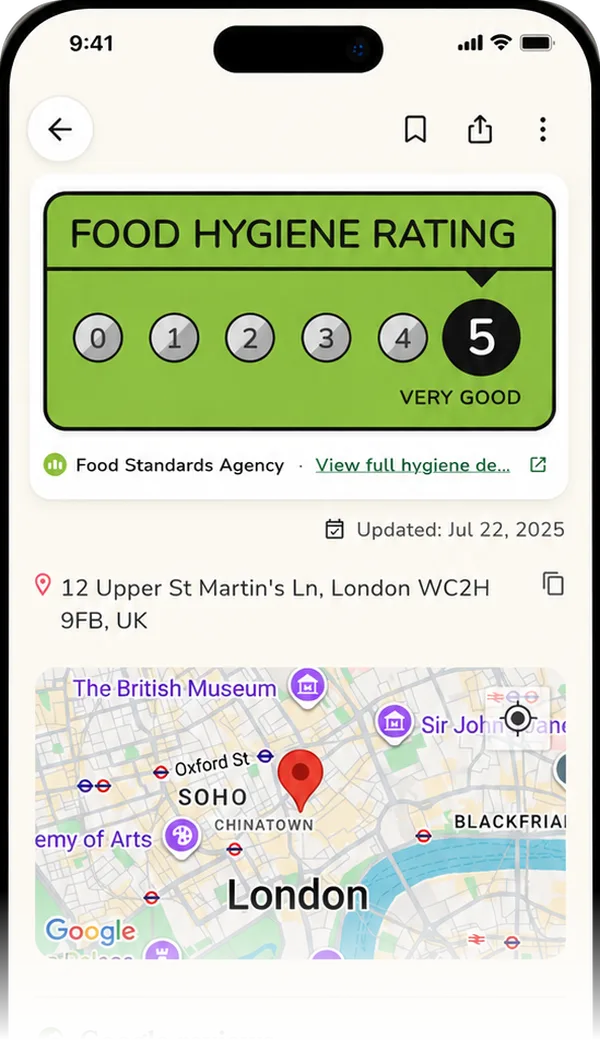
How to check one in DineHop
- Search for the restaurant by name, or tap it in the results list.
- Open the place detail screen and scroll to the hygiene section.
- Read the score alongside the date of the inspection it came from.
- If the date is old, treat the score as older evidence rather than current.
What to do with a low score
A one or a two means the officer found problems that needed fixing. Businesses can be re-inspected after they act, so check the date before writing a place off.
Questions about a specific rating go to the local authority that issued it, not to us. You can reach us at contact@dinehop.app for anything about the app.
Common questions
Does a low rating mean the food is bad?
No. It means the last inspection found problems with food safety practices, not with the cooking.
How often are restaurants inspected?
It varies by risk. A high-risk kitchen is visited more often than a cafe serving packaged food.